Someone starts selling homemade pickles on Instagram, or opens a small tiffin service, or sets up a cloud kitchen — and it’s only after a customer, a delivery app, or a landlord asks for it that they even hear the words “FSSAI license.” By then there’s usually a deadline, a bit of panic, and a lot of confusion about which form applies to them.
So let’s clear this up properly, without the jargon.
What Is FSSAI, Actually?
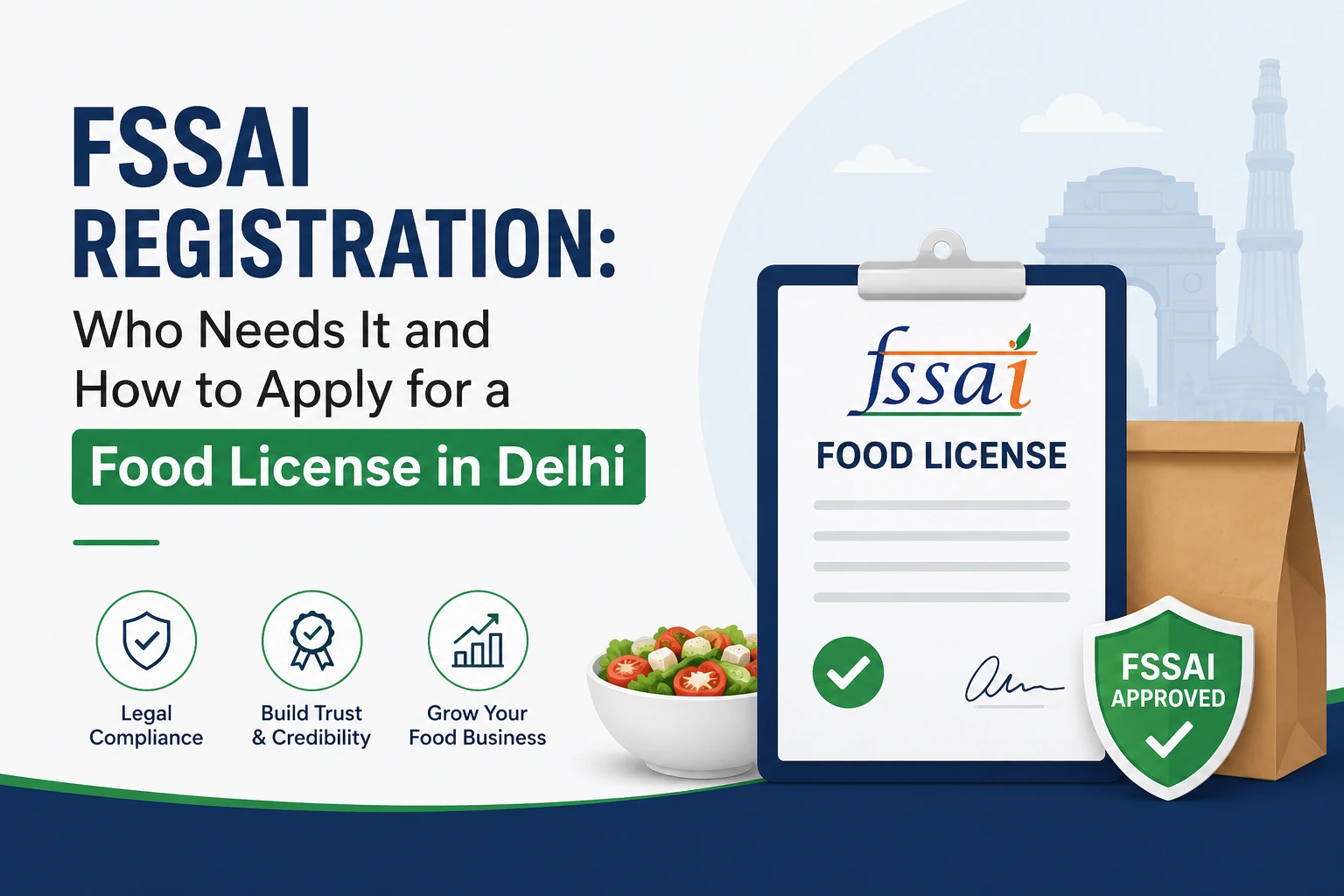
FSSAI stands for the Food Safety and Standards Authority of India. It’s the government body that regulates and supervises food safety in the country — everything from a roadside chaat stall to a large-scale food manufacturing unit falls under its watch.
If you manufacture, store, transport, distribute, or sell food in India — in any form, at any scale — you need some form of FSSAI registration or license. This isn’t optional, and it isn’t just for big companies. It applies to home bakers, cloud kitchens, restaurants, dairies, caterers, food trucks, grocery stores, importers/exporters of food items, and even people running food stalls at events.
Who Actually Needs It?
This is where most people get stuck, because FSSAI isn’t one single license — it’s three different categories, based on the size of your business.
Basic Registration is for very small operations — typically an annual turnover under ₹12 lakh. Think home-based food businesses, small tea stalls, petty food manufacturers, or someone running a modest cloud kitchen out of their home. This is the easiest and cheapest to get.
State License applies once your turnover crosses ₹12 lakh but stays under ₹20 crore. This covers most mid-sized restaurants, hotels, small-to-mid manufacturing units, and food businesses that operate within a single state.
Central License is for the big players — turnover above ₹20 crore, or businesses involved in import/export of food products, or operations spanning multiple states. Large manufacturers, importers, and multi-state food chains fall here.
If you’re not sure which one applies to you, a simple rule of thumb: start with your turnover, then check if you’re dealing with imports/exports or multi-state operations, since those push you into Central License territory regardless of turnover.
Why You Shouldn’t Skip It
Operating a food business without FSSAI registration isn’t a small technicality — it’s a legal violation with real consequences. Authorities can impose penalties, and in more serious cases, shut down operations entirely. Beyond the legal risk, most delivery platforms (Zomato, Swiggy), landlords for commercial kitchen space, and even B2B buyers will ask for your FSSAI number before they work with you. No license, no listing.
There’s also a trust angle. Displaying your FSSAI number on packaging or at your outlet tells customers your food business has met basic safety and hygiene standards recognized by the government. In a market where people are increasingly cautious about what they eat, that little number does more for credibility than most marketing ever will.
Documents You’ll Typically Need
The exact list varies slightly depending on which category you fall under, but generally you’ll need:
- Passport-size photograph of the applicant/proprietor
- Identity and address proof (Aadhaar, PAN, etc.)
- Proof of business premises (rent agreement, electricity bill, or property papers)
- Business constitution proof (partnership deed, incorporation certificate, etc., if applicable)
- A food safety management plan or declaration (mainly for State/Central License)
- List of food products you intend to deal in
- NOC from the local municipal authority, in some cases (for the premises)
For a home-based basic registration, this list shrinks considerably — often just ID proof, address proof, and a passport photo.
How to Apply in Delhi — Step by Step
Step 1: Figure out your category. Estimate your turnover and business scale honestly. Getting this wrong means either overpaying for a license you don’t need, or under-licensing and risking penalties later.
Step 2: Register on the FSSAI FoSCoS portal. All applications now go through the FoSCoS (Food Safety Compliance System) portal — the older Food Licensing and Registration System has been phased out. You’ll create an account and select the appropriate registration/license type.
Step 3: Fill in the application form. This includes your business details, premises information, the type of food business you run (manufacturing, trading, storage, transport, etc.), and the products you deal in.
Step 4: Upload the required documents. Scanned copies of everything listed above, in the format specified by the portal.
Step 5: Pay the applicable fee. Fees depend on your category and license validity period (you can typically choose 1 to 5 years for State/Central licenses).
Step 6: Wait for verification. For Basic Registration, this is usually quick. For State and Central Licenses, an inspection of your premises may be required before approval.
Step 7: Receive your FSSAI registration certificate or license. Once approved, you’ll get your unique 14-digit FSSAI number, which needs to be displayed at your premises and printed on your food packaging/labels.
If any of this feels like too much back-and-forth with the portal — inspections, document formatting, category confusion — that’s usually where working with a consultant saves both time and rework. It’s a small fee to avoid a rejected application or a wrongly chosen license category.
How Long Does It Take?
Basic Registration in Delhi typically takes anywhere from 7 to 15 working days once documents are in order. State and Central Licenses take longer — often 30 to 60 days — mainly because of the premises inspection step. Delays are almost always caused by incomplete documentation, so getting the paperwork right the first time matters more than people expect.
Conclusion
FSSAI registration isn’t just paperwork you do to satisfy a government checkbox — it’s what lets you legally operate, list on delivery platforms, sell in retail, and build customer trust. Whether you’re running a home bakery or scaling into a full commercial kitchen, knowing which category you fall under and getting your documentation right from the start saves you from delays, penalties, and rejected applications down the line.
If you’re unsure which license fits your business or you’d rather not deal with the portal yourself, that’s exactly the kind of thing a tax and compliance consultant handles day in and day out — so you can focus on running the kitchen, not the paperwork.