Say you’ve found a supplier in Vietnam, or a buyer in Germany wants your handmade textiles. The deal looks good and you’re ready to ship. Then someone asks, “Do you have an IEC?”
If you don’t know what that means, this guide is for you.
What is an IEC?
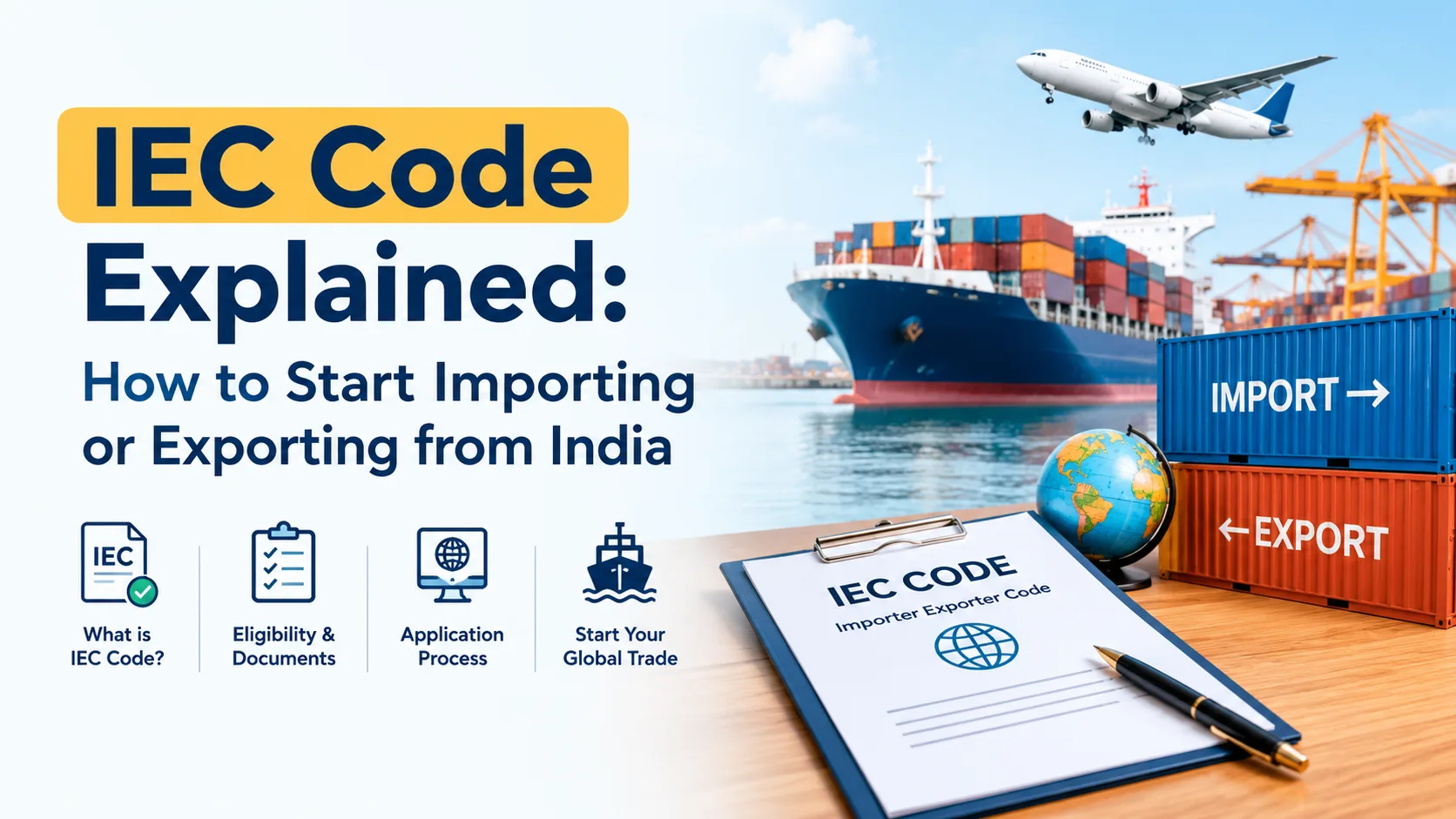
IEC stands for Import Export Code. It’s a 10-character identification number issued by the Directorate General of Foreign Trade (DGFT), which sits under the Ministry of Commerce and Industry. Indian customs, banks, shipping lines and courier companies use it to identify who is behind a cross-border shipment.
Since 2014, the IEC code has been the same as your PAN. If your PAN is ABCDE1234F, that is your IEC too. You still have to apply for it on the DGFT portal, though. Having a PAN doesn’t make you an IEC holder automatically.
Who needs one?
In general, anyone importing or exporting goods as part of a business needs an IEC. That covers proprietors, partnerships, LLPs, companies, trusts and societies. Customs will not clear a commercial consignment without it, and banks will ask for it before processing foreign payments tied to trade.
There are exceptions under the Foreign Trade Policy. You usually don’t need one if:
- You are importing or exporting for personal use, and it isn’t connected to any trade or manufacture.
- You are a government department or ministry.
- You are exporting services only. This is a grey area, because you may still need an IEC to claim certain benefits under the policy, so check your own case.
If you are unsure, getting one is cheap and easy enough that it is usually the safer choice.
What does it cost, and how long is it valid?
- Government fee: ₹500, one time, paid online.
- Validity: Lifetime, with one condition (explained below).
- Time to get it: Typically 1 to 3 working days if your documents are in order.
Be careful with agents who charge much more than ₹500. Their service fee may be fair if they handle the paperwork for you, but the government fee itself hasn’t changed.
What you need before you apply
Gather these first so you aren’t scrambling halfway through:
- PAN of the person or business applying.
- Aadhaar (for individuals and authorised signatories).
- Proof of address for your business premises, such as a rent agreement, electricity bill or ownership paper.
- Bank proof, either a cancelled cheque with your name and account number printed on it, or a bank certificate.
- A passport-size photograph.
- Entity documents if you aren’t a sole proprietor, such as a certificate of incorporation or a partnership deed.
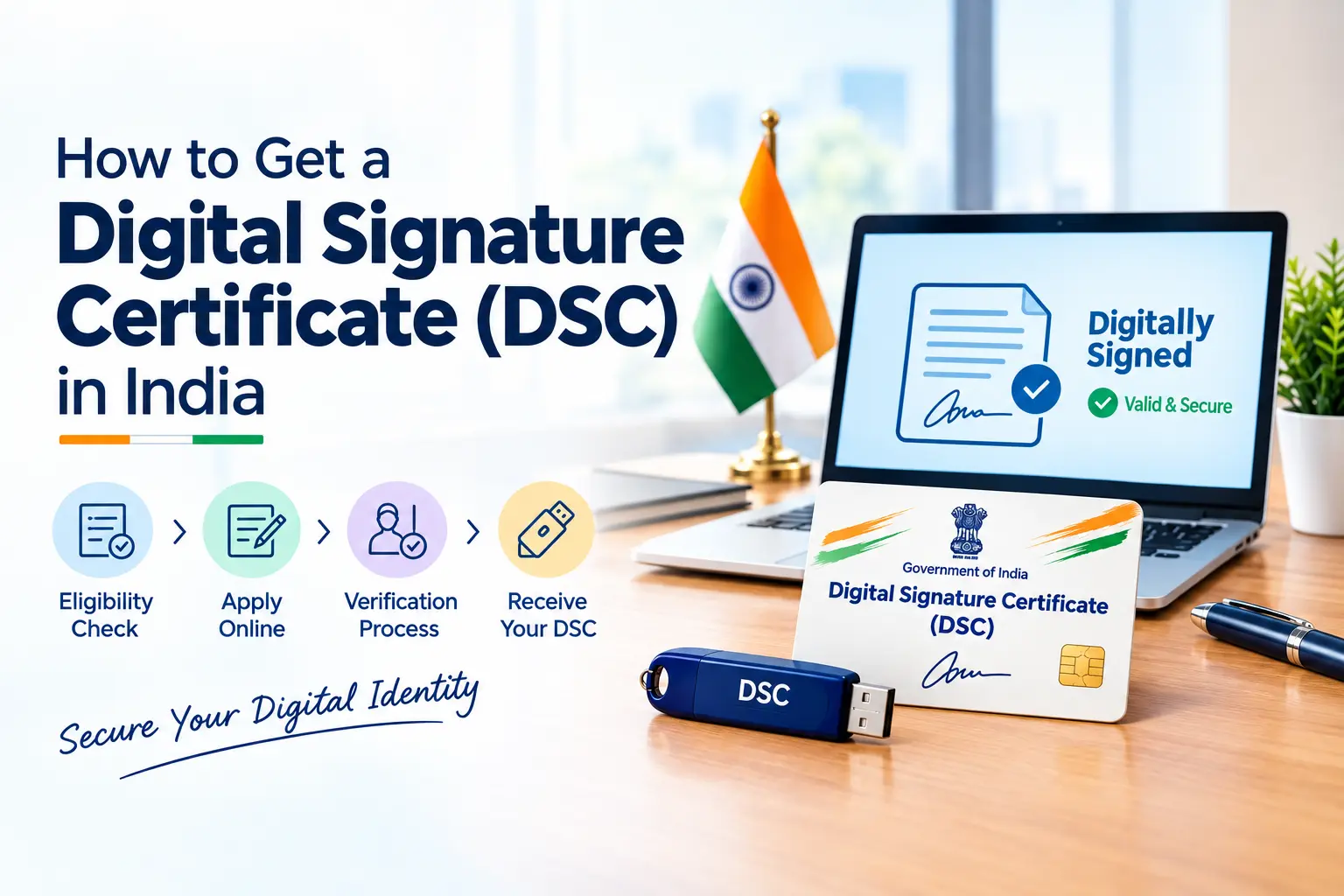
- A Digital Signature Certificate (DSC) for companies and LLPs. Getting one can take a day or two, so sort it out early. It’s often the step that holds people up.
You also need an email address and mobile number that you can access, because OTPs go there.
How to apply
The whole process happens on dgft.gov.in.
- Register on the DGFT portal with your email and mobile number, and verify the OTPs.
- Log in and choose the option to apply for a new IEC (look for “Start Fresh Application”).
- Fill in the form. It covers business details, addresses, bank information and the details of the proprietor, partners or directors.
- Upload your documents as clear PDFs or JPGs.
- Sign the application with an Aadhaar e-sign if you’re an individual, or a DSC for a company or LLP.
- Pay ₹500 through the payment gateway (net banking, UPI or card).
- Download your e-IEC certificate from the dashboard once it’s issued. You’ll also get it by email.
Most rejected applications fail on small mismatches. A name that differs between your PAN and your bank account, or an address that doesn’t match your proof, will hold things up. Check these before you submit.
The rule most beginners miss: annual updating
Your IEC lasts for life, but since 2021 you’ve had to confirm or update your details on the DGFT portal once every financial year, between 1 April and 30 June. You have to do it even if nothing has changed, and it costs nothing.
If you miss the window, the IEC is deactivated, and a deactivated code can hold up your shipments at customs. You can reactivate it by completing the pending update, but the delay can be costly if cargo is waiting.
My advice is to put a reminder in your calendar for early April. Don’t leave it for the last week of June.
What to do after you get your IEC
The IEC is only the first step. Depending on what you’re doing, you’ll probably need a few more things:
- A current bank account, and a bank that handles foreign exchange (an “Authorised Dealer” bank). Register its code with customs so your shipping bills and payments line up.
- ICEGATE registration. This is the customs e-filing portal, and your customs broker or freight forwarder will usually work with you on it.
- GST registration. It’s often necessary in practice, because exports are zero-rated and refunds or Letter of Undertaking (LUT) filings depend on it.
- Product-specific licences. Some goods need extra approvals, for example food items, drugs, electronics with wireless parts, or restricted and prohibited items. Check the ITC-HS classification of your product and see whether it’s free, restricted or prohibited.
- Export promotion council or commodity board membership, if your product category needs it. Some schemes require it.
Common mistakes
- Waiting until a shipment is ready before applying. Plan for at least a week, with a margin for DSC delays.
- Applying under the wrong PAN. The IEC is tied to the PAN, so the entity applying must be the one actually trading.
- Forgetting the annual update.
- Trusting someone who promises an IEC registration in india “without documents”. The process is self-declaration based but needs real documents, and a code obtained by shortcuts can cause problems later.
- Assuming the IEC lets you trade in anything. It doesn’t override restrictions on specific goods.
Final thoughts
The IEC looks intimidating when you first hear the term, but it’s one of the simpler registrations in Indian trade. It takes a PAN, a few documents, ₹500 and a couple of days, and then you’re set for life as long as you do the annual update.
Rules and portal screens do change from time to time, so before you apply, confirm the current process and fee on dgft.gov.in. Good luck with your first shipment.