Tax season doesn’t have to feel overwhelming. If you’ve been putting off filing your return because the whole process feels confusing, you’re not alone — most people feel the same way, and that’s exactly why we built a service around making it easy. Whether you’re a salaried employee, a freelancer, a small business owner, or an NRI with income in India, we help you get your income tax return filed correctly, on time, and with the maximum refund you’re entitled to.
For the current cycle — Financial Year 2025-26, Assessment Year 2026-27 — the rules have a few updates worth knowing, and we walk you through all of them so nothing catches you off guard.
Why Bother With ITR Filing At All?
A lot of people assume filing a return is only for those who owe money to the government. That’s not true. Even if your income is below the taxable limit, filing gives you a documented financial history that banks, embassies, and government bodies actually check.
Here’s what a properly filed income tax return does for you:
- Keeps you compliant – you avoid late fees and any unwanted attention from the tax department.
- Gets you your refund – if extra TDS was deducted from your salary or payments, filing is the only way to claim it back.
- Strengthens loan and visa applications – banks typically ask for your last 2-3 years of ITRs before approving a home, car, or personal loan, and most visa applications require it too.
- Lets you carry forward losses – if you had capital losses or business losses this year, filing on time means you can adjust them against future profits.
- Builds a clean financial record – useful for audits, big purchases, or simply peace of mind.
Who Actually Needs to File?
You need to file an ITR if any of these apply to you:
- Your annual income is above the basic exemption limit
- You run a business or work as a professional with taxable income
- You’re an NRI earning income from India (rent, capital gains, interest, etc.)
- You’ve made capital gains from shares, mutual funds, or property
- You hold foreign assets or a foreign bank account
- You’ve had unusually high bank deposits, foreign travel spends, or electricity bills during the year — these can trigger a mandatory filing requirement even if your income is otherwise below the limit
Picking the Right ITR Form (This Trips Up a Lot of People)
One of the most common questions we get is simply — which ITR form do I even need? Filing with the wrong one can get your return marked defective, which delays everything, including your refund.
- ITR-1 (Sahaj) – for resident individuals with income up to ₹50 lakh from salary, pension, one house property (now up to two properties are allowed under the latest rules), and other basic sources like interest.
- ITR-2 – for individuals or HUFs with capital gains, more than two house properties, foreign income or assets, or total income above ₹50 lakh, but no business income.
- ITR-3 – for business owners and professionals with income from a proprietary business or profession, including F&O traders.
- ITR-4 (Sugam) – for small businesses and professionals who’ve opted for presumptive taxation.
If you’re not sure where you fit, that’s fine — that’s essentially what we’re here for. We look at your income sources and pick the correct form before we file anything on your behalf.
Documents You’ll Need to Keep Ready
The smoother your paperwork, the faster the whole process gets done. Here’s what to have on hand:
- PAN card and Aadhaar card
- Form 16 (for salaried individuals)
- Form 16A / other TDS certificates
- Bank statements for the financial year
- AIS and Form 26AS (we’ll help you download and reconcile these)
- Investment proofs — ELSS, PPF, NSC, insurance premiums, and so on
- Home loan interest certificate, if applicable
- Capital gains statements from shares, mutual funds, or property sales
- Business income and expense records, if you’re self-employed or freelancing
- Donation receipts under Section 80G
- Rent receipts or rental income details
Important Dates for AY 2026-27
For this filing cycle, individual taxpayers filing ITR-1 or ITR-2 need to file by 31st July 2026, while businesses and professionals filing ITR-3 or ITR-4 (non-audit cases) get an extra month, until 31st August 2026. If your accounts require an audit, the deadline extends to 31st October 2026.
Missed the deadline? You can still file a belated return by 31st December 2026, though a late fee under Section 234F will apply — ₹1,000 if your total income is under ₹5 lakh, and ₹5,000 otherwise. If you spot a mistake after filing, revised returns can be submitted up to 31st March 2027.
Old Regime or New Regime — Which Should You Pick?
This is another question that comes up constantly during tax season. The new tax regime offers lower slab rates but strips away most deductions and exemptions. The old regime keeps higher rates but lets you claim things like Section 80C investments, HRA, and home loan interest. Salaried individuals can switch between the two every year, so there’s no harm in comparing both before you file — and honestly, this is one of the easiest ways to save money that people overlook. We run both calculations for you and recommend whichever saves you more.
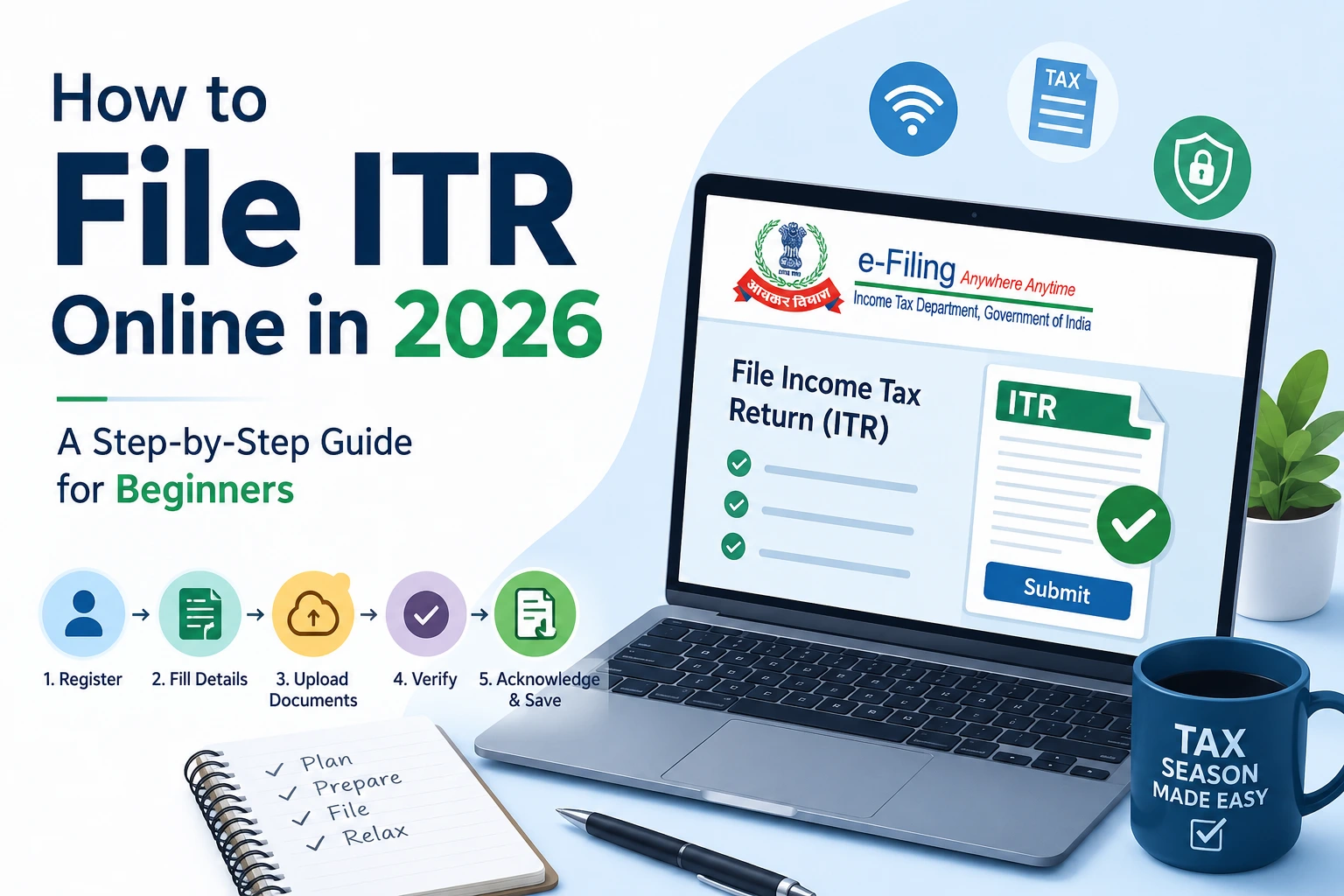
How Our Online ITR Filing Process Works
We’ve kept this as simple as it can get:
- Share your documents – send us your Form 16, AIS/Form 26AS, investment proofs, and bank statements securely.
- We verify everything – our team checks your details, matches them against AIS/26AS, and flags any mismatches before filing.
- We pick the right form – based on your actual income sources, not guesswork.
- We e-file and hand you the acknowledgment – your return gets submitted electronically, and we don’t stop there.
After filing, we also help with e-verification (your return isn’t considered filed until this step is done) and keep you posted on your refund status until the money actually lands in your account.
Why People Choose Us to Handle Their Taxes
- Real tax professionals, not a generic form-filling tool
- Maximum refund focus – we check every deduction you’re eligible for, not just the obvious ones
- Your data stays private – we don’t share or sell your financial information
- No hidden charges – you know the cost upfront
- Reminders before deadlines, so nothing sneaks up on you
- Support even after filing – if a notice or mismatch comes up later, we’re still around to help
Frequently Asked Questions
What’s the last date to file ITR for AY 2026-27?
Salaried individuals filing ITR-1 or ITR-2 have until 31st July 2026. Businesses and professionals filing ITR-3 or ITR-4 without an audit requirement have until 31st August 2026, while audit cases go up to 31st October 2026.
What happens if I file my ITR late?
You can still file a belated return until 31st December 2026, but you’ll pay a late fee — ₹1,000 if your income is under ₹5 lakh, ₹5,000 if it’s above that — plus interest on any unpaid tax.
Can I file my ITR without Form 16?
Yes. Salary slips, bank statements, and your AIS/Form 26AS can be used instead to reconstruct your income details.
How long does the refund actually take after filing?
Usually 4-6 weeks after e-verification, though it can vary depending on how the department is processing returns that year.
Do I need to file if my income is below the taxable limit?
It’s not mandatory, but it’s still worth doing — especially if TDS was deducted from any of your income, since filing is the only way to get that money back.
How much do you charge for this service?
It depends on your income complexity — a salaried return costs differently than one involving capital gains or business income. Reach out and we’ll give you a straight answer, no hidden add-ons.
Ready to Get Your ITR Filed?
You don’t need to figure out ITR forms, tax regimes, or AIS mismatches on your own. Send us your documents, and we’ll take it from there — accurately, on time, and with your refund maximized.
You Might Also Need
- GST Registration & Return Filing
- TDS Return Filing
- NRI Taxation Services
- Tax Planning & Advisory